
Learn the “eyes” of the AI and robotics era
- An Introduction to Machine Vision Cameras from the Ground Up -
1. Introduction to Machine Vision Cameras
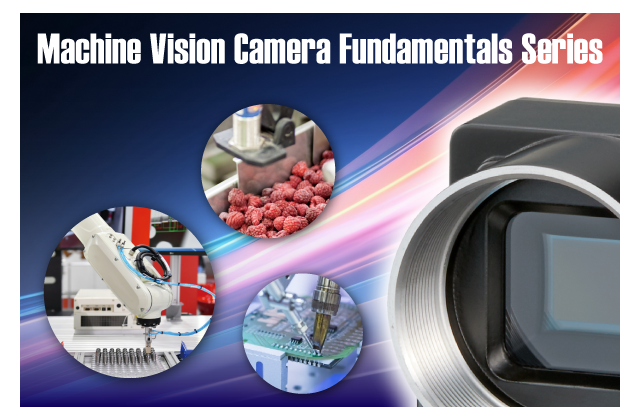
Machine Vision Cameras are specialized cameras used as the “eyes” of machines in factories and research sites. They play an important role in manufacturing by detecting scratches and dirt, measuring component dimensions, and supporting robot motion.
This course explains the differences from general-purpose cameras and the basic usage of industrial cameras in an easy-to-understand manner.
Definition of Machine Vision Cameras
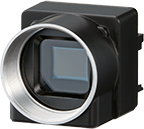
An "industrial camera" is a camera used by machines or computers to analyze images and make judgments.
It is mainly used for automation in manufacturing and inspection. Because it is used in industrial environments, it can deliver stable performance under severe conditions and provide high-precision images.
Because industrial cameras are mainly used in machines, they are also called "machine vision camera(s)".


Applications of Machine Vision Cameras
Machine Vision Cameras are mainly used for the following applications.
- 1. Appearance inspection
- Detects scratches, stains, chips, foreign matter contamination, and similar defects.
- 2. Soldering inspection
- Checks solder conditions on electronic circuit boards.
- 3. Package inspection
- Detects incorrect label application and printing errors.
- 4. Dimensional measurement
- Measures component length, width, angle, and other dimensions with high accuracy.
- 5. Positioning
- Obtains position information so that a robot arm can accurately pick up parts.
- 6. Barcode and 2D code reading
- Supports reading on high-speed production lines.
- 7. License plate recognition
- Automatically reads vehicle license plate numbers.
- 8. Anomaly detection using deep learning
- AI detects minute defects that are difficult for humans to distinguish.
- 9. Image analysis of cells and tissues
- Works with a microscope to automatically count cell shapes and numbers.
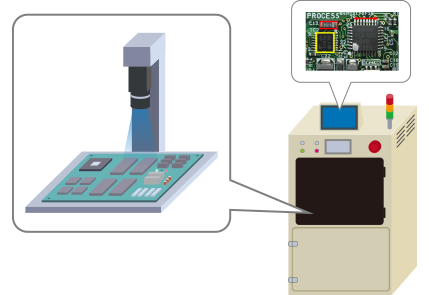
(PCB inspection)
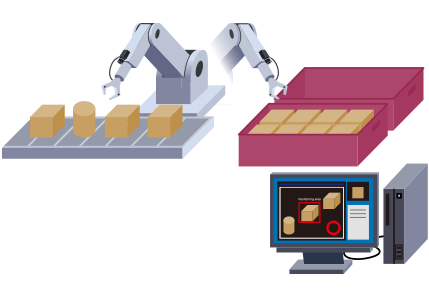
(Shape identification)
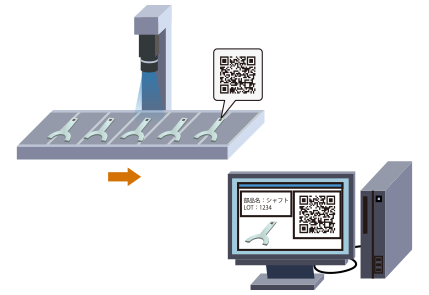
(2D code reading on products)
Differences from General-purpose Cameras
Machine Vision Cameras are specialized for image analysis and judgment. Therefore, they have functions and performance characteristics that differ from general-purpose cameras such as photographic cameras and web cameras.
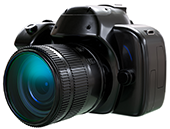
- 1. Photographic cameras (DSLRs, mirrorless cameras, compact digital cameras, etc.)
- - Main applications: Photography, video production, hobbies, commercial photography, etc.
- - Features: High resolution, emphasis on color reproduction, many models with interchangeable lenses.
- - Automatic functions: Autofocus, exposure compensation, white balance, etc.
- - Output formats: JPEG, RAW, etc.
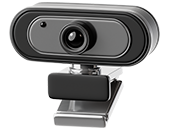
- 2. Web cameras (built-in notebook PC cameras, external USB cameras, etc.)
- - Main applications: Video calls, online meetings, streaming.
- - Features: Low cost, compact size, USB connection, emphasis on real-time video.
- - Automatic functions: Simple autofocus and exposure adjustment.
- - Output formats: Usually compressed video (MJPEG, H.264, etc.).
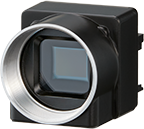
- 3. Machine Vision Cameras
- - Main applications: Automated factory inspection, robot control, quality control.
- - Features: High speed and high precision, stable long-term operation, trigger image capture support.
- - Automatic functions: Basically manual settings, assuming precise control.
- - Output formats: Uncompressed images (RAW, BMP, etc.).
Major Types of Machine Vision Cameras
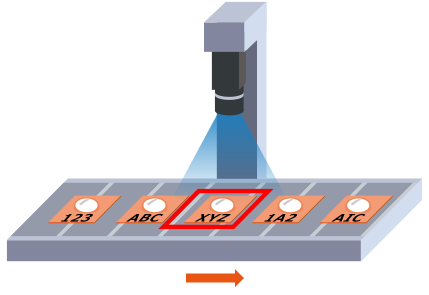
- 1. Area Scan Camera
- - Like a general-purpose camera, this versatile type can “capture the entire area at once.”
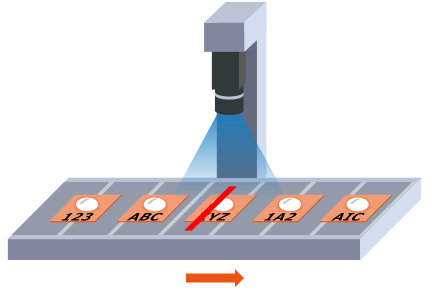
- 2. Line Scan Camera
- It “captures one line at a time” for objects moving at high speed, such as conveyors in manufacturing lines and logistics, and generates continuous images.
- 3. 3D Camera
- - It acquires three-dimensional information including depth and is used for shape recognition and dimensional measurement.
- 4. UV / IR Camera
- - It can detect light at invisible wavelengths and helps with quality control and anomaly detection by visualizing heat distribution and material-specific characteristics.
- 5. Hyperspectral / Multispectral Camera
(Hyperspectral / Multispectral Camera)- - By capturing and analyzing light in multiple wavelength bands, it can visualize invisible information and is used not only in industry but also in agriculture and environmental fields.
Features and Functions of Machine Vision Cameras
- 1. High durability and reliability
- - It has a rugged body structure resistant to vibration and shock, and uses components that can withstand high and low temperatures and humidity changes.
- 2. Customizability and expandability
- - Because it is used for automated equipment and robots in factories, imaging conditions such as the area used within the image and image acquisition timing can be controlled, and detailed adjustments can be made according to user needs.
- - Standardized peripheral specifications allow accessories such as lenses to be selected according to the application.
- 3. Excellent image quality and processing speed
- - Some models are equipped with high-resolution sensors and provide clear images for inspecting minute components.
- - High-frame-rate models can accurately capture fast-moving objects.
- 4. Visualization of invisible light
- - In addition to visible light, some cameras can be used in the ultraviolet and infrared ranges, allowing selection according to the application.