-
Technical Information

Teli Core Technology
- Proprietary IP Core Technology- Teli Core Technology is Toshiba Teli’s proprietary IP core technology for industrial cameras.
By implementing time-critical camera control functions as dedicated FPGA hardware logic rather than CPU-based software, it enables deterministic camera control with exceptional responsiveness and stability.
- Teli Core Technology is Toshiba Teli’s proprietary IP core technology for industrial cameras.
-
Seminar

The USB 10Gbps Era Begins. Exploring Toshiba Teli’s New “F Series” USB Camera (in Japanese)
- Our engineer conducted a lecture at "ITE2025" held in Yokohama Japan on December 2025.
The brochure for the seminar "The USB 10Gbps Era Begins. Exploring Toshiba Teli’s New “F Series” USB Camera" is available.
- Our engineer conducted a lecture at "ITE2025" held in Yokohama Japan on December 2025.
-
Technical Information

Sequential Shutter function
- Sequential Shutter is a function that acquires subject images under multiple shooting conditions.
For example, it is used to obtain multiple images with varying exposure times, gain, and image offsets.
By combining it with Trigger Mode, you can switch between multiple pre-programmed camera settings for each frame upon trigger input, allowing for versatile and dynamic image capture.
- Sequential Shutter is a function that acquires subject images under multiple shooting conditions.
-
Technical Information
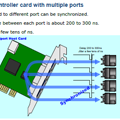
Bus Synchronization Mode (USB3 Camera)
- Toshiba Teli's unique "Bus Synchronization Mode" can synchronize exposure time easily in an application with multiple use of USB3 camera BU series.
"Bus Synchronization Mode" provides optimized circumstances for stereo camera, motion capture, multi vision logger etc.
- Toshiba Teli's unique "Bus Synchronization Mode" can synchronize exposure time easily in an application with multiple use of USB3 camera BU series.
-
Seminar

Toshiba Teli's Product Strategy (in Japanese)
- Our engineer conducted a lecture at "ITE2024" held in Yokohama Japan on December 2024.
The brochure for the seminar "Toshiba Teli's Product Strategy: Strengths and Future Prospects" is available.
- Our engineer conducted a lecture at "ITE2024" held in Yokohama Japan on December 2024.
-
Technical Information

About Surface Flaw Detection Scope
- Do you have any trouble about the inspection of flat surface?
Surface Flaw Detection Scope (SFD Scope) is suitable to detect the flaws on the glossy surface without software processing.
We would like to introduce how SFD Scope inspects the flaws.
- Do you have any trouble about the inspection of flat surface?
-
Seminar

Toshiba Teli's Product Strategy (in Japanese)
- Our engineer conducted a lecture at "ITE2023" held in Yokohama Japan on December 2023.
The brochure for the seminar "Toshiba Teli's Product Strategy: Strengths and Future Prospects" is available.
- Our engineer conducted a lecture at "ITE2023" held in Yokohama Japan on December 2023.
-
Seminar

Toshiba Teli's Latest Technology Policy (in Japanese)
- Our engineer conducted a lecture at "ITE2022" held in Yokohama Japan on December 2022.
The brochure for the seminar "Toshiba Teli's Latest Technology Policy: High-Speed Interface Strategy" is available.
- Our engineer conducted a lecture at "ITE2022" held in Yokohama Japan on December 2022.
-
Seminar

Toshiba Teli's Latest Technology Policy (in Japanese)
- Our engineer conducted a lecture at "ITE2022" held in Yokohama Japan on December 2022.
The brochure for the seminar "Toshiba Teli's Latest Technology Policy: Surface Flaw Detection Scope" is available.
- Our engineer conducted a lecture at "ITE2022" held in Yokohama Japan on December 2022.
-
Technical Information
Useful knowledge of optics - Depth of field, hyperfocal distance, and hyperfocal sequence
- The depth of field is the distance between the nearest and the farthest objects in an image that appear acceptably sharp.
This white paper describes, in an easy-to-understand way, the depth of field in relation to the hyperfocal distance and the hyperfocal sequence.
- The depth of field is the distance between the nearest and the farthest objects in an image that appear acceptably sharp.
-
Technical Information

Which lens should I use to capture this image
- Machine vision requires a photographic lens to project an image of an object onto a camera’s image sensor.
Its selection method is described in our product brochures and on our website as well as in commercially available books and trade journals. However, we receive many questions about the relationship between a field of view (FoV, i.e., the area of the inspection captured on the camera’s image sensor) and a camera’s optical system although it can be calculated very easily.
This white paper gives several examples to plainly describe how to select a camera lens that satisfies your FoV requirement.
- Machine vision requires a photographic lens to project an image of an object onto a camera’s image sensor.
-
Technical Information

TeliCamSDK Viewer comparison
- This document describes the features and enhancements of the new viewer called "TeliViewer" and compares its functions with those of TeliU3vViewer / TeliGevViewer.
-
Seminar

Toshiba Teli's IoT and AI Proposals (in Japanese)
- Our engineer conducted a lecture at "ITE2021" held in Yokohama Japan on December 2021.
The brochure for the seminar "Toshiba Teli's IoT and AI Proposals: Chapter 1 - Toshiba Teli's Imaging Solutions" is available.
- Our engineer conducted a lecture at "ITE2021" held in Yokohama Japan on December 2021.
-
Seminar

Toshiba Teli's IoT and AI Proposals (in Japanese)
- Our engineer conducted a lecture at "ITE2021" held in Yokohama Japan on December 2021.
The brochure for the seminar "Toshiba Teli's IoT and AI Proposals: Chapter 2: Imaging IoT Systems" is available.
- Our engineer conducted a lecture at "ITE2021" held in Yokohama Japan on December 2021.
-
Seminar

Toshiba Teli's IoT and AI Proposals (in Japanese)
- Our engineer conducted a lecture at "ITE2021" held in Yokohama Japan on December 2021.
The brochure for the seminar "Toshiba Teli's IoT and AI Proposals: Chapter 3: PEKAT VISION" is available.
- Our engineer conducted a lecture at "ITE2021" held in Yokohama Japan on December 2021.
-
Technical Information

Strobe control from a camera
- Most of our machine vision camera provide a high-performance general-purpose input/output (GPIO). Combining the functions of the GPIO makes it possible to control the strobe light timing from a camera.
-
Technical Information

Overlapped Trigger function
- There is a strong market requirement for minimizing the interval between trigger inputs in Trigger mode. To satisfy this requirement, some of Teli’s camera models are equipped with an overlapped trigger function.
-
Seminar
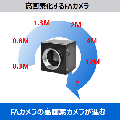
Proposal of high-resolution, high-speed interface camera with the latest technology (in Japanese)
- Our engineer conducted a lecture at "ITE2020" held in Yokohama Japan on December 2020.
The brochure for the seminar "Proposal of high-resolution, high-speed interface camera with the latest technology" is available.
- Our engineer conducted a lecture at "ITE2020" held in Yokohama Japan on December 2020.
-
Technical Information

Suggestion for S-mount solution with S-C mount conversion adaptor ring SCAR
- S mount is a small size lens mount mainly used for port camera etc.
S mount lens, in general, has several advantages such as smaller size than C mount lens, more variations of focal length especially for fish-eye lens and short focus lens, lower cost etc.
This document describes the mount conversion adapter of “SCAR” that is useful for the S mount lens to attach to the C mount camera.
- S mount is a small size lens mount mainly used for port camera etc.
-
Technical Information
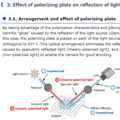
Reflection & polarization of light in machine vision
- In shooting a subject with high reflectance, glare or shine reflected by light from the source frequently affects image processing. In this case, polarizer is generally used as counter measure. Why only affection of glare or shine is removed? Reflection and polarization of light is described here for easy understanding.
-
Technical Information
Color Appearances of Invisible Light by an IR Cutoff Filterless Color Camera
- There are some applications which take the images using a color camera without the IR cutoff filter (IRCF) under invisible light in Machine Vision Systems, but the color appearances of these applications are rarely talked about.
Therefore, the image data of mono wavelength light (MWL) which are including UV, IR and visible light were taken by using an IR cutoff filterless (IRCF-less) color camera.
- There are some applications which take the images using a color camera without the IR cutoff filter (IRCF) under invisible light in Machine Vision Systems, but the color appearances of these applications are rarely talked about.
-
Technical Information
Consideration for depth of field in machine vision
- In the machine vision field, optical magnification is important to select taking lens or to consider optical system.
However, it is not well known and sometimes confused that magnification has a meaning other than imaging magnification, generally known, which indicates size ratio of object and image.
We would like to explain, here, a concept and applications of magnification clearly.
- In the machine vision field, optical magnification is important to select taking lens or to consider optical system.
-
Seminar

Toshiba Teli's prospect of high resolution camera ・・・
- Our engineer conducted a lecture at "ITE2019" held in Yokohama Japan on December 2019.
The brochure for the seminar "Toshiba Teli's prospect of high resolution camera ・・・" is available.
- Our engineer conducted a lecture at "ITE2019" held in Yokohama Japan on December 2019.
-
FAQ
What should we do if the duplicated camera image is displayed on multiple network?
- If the camera is used with single system (PC) which has multiple network adapter, image might be displayed on each network adapter.
-
FAQ
What is a Sequential shutter?
- Sequential Shutter is a function for capturing images of a target object under multiple camera settings, for example, changing exposure time, gain, image offset, and so on.
-
Technical Information
Understanding Lens Magnification
- In the machine vision field, optical magnification is important to select taking lens or to consider optical system.
However, it is not well known and sometimes confused that magnification has a meaning other than imaging magnification, generally known, which indicates size ratio of object and image.
We would like to explain, here, a concept and applications of magnification clearly.
- In the machine vision field, optical magnification is important to select taking lens or to consider optical system.
-
FAQ
What should we do if a camera is not recognized by viewer software "TeliU3vViewer"?(645KB)
- In case of connecting BU/DU camera with PC, the camera may not be always recognized in viewer software "TeliU3vViewer". In such a case, we will explain how to check and replace the driver using device manager.
-
FAQ
How to use external trigger signal stably?
- External trigger signal cannot work stably with affection of external noise. "Anti glitch" and "Anti chattering" function in the camera are recommended for such case. These functions can be set with our software development kit of "TeliCamSDK".
-
FAQ
How to use LUT
- LUT (Look Up Table) feature is a feature to convert input signal value to arbitrary value using look up table inside the camera. User application can modify the contents of look up table freely. Typical applications of LUT are gamma correction, image thresholding, positive-negative reversal.
-
FAQ
Corrupted image
(e.g. BU1203MCF)- This document shows how to get normal images when the following corrupted images are acquired.
-
Seminar
Future concept of machine vision camera by Toshiba Teli Co. ・・・
- Our engineer conducted a lecture at "ITE2018" held in Yokohama Japan on December 2018.
The brochure for the seminar "Future concept of machine vision camera by Toshiba Teli Co. ・・・" is available.
- Our engineer conducted a lecture at "ITE2018" held in Yokohama Japan on December 2018.
-
Product documents
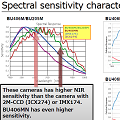
User's guide of USB3 camera BU406M / BU205M series
- BU406M / BU205M series are USB3 cameras with global shutter method which CMOSIS's CMOS sensor is applied. 5 models of product range offers a choice among 4M pixel, 2M pixel, color, monochrome, NIR, with or without IR cut filter.
This user's guide explains advantage and performance of BU406M / BU205M series.
- BU406M / BU205M series are USB3 cameras with global shutter method which CMOSIS's CMOS sensor is applied. 5 models of product range offers a choice among 4M pixel, 2M pixel, color, monochrome, NIR, with or without IR cut filter.
-
Product documents
User's guide of GigE camera BG505LM / BG302LM series
- BG505LM / BG302LM series are USB3 cameras with global shutter method which Sony's Pregius CMOS sensor is applied. 6 models of product range offers a choice among 5M pixel, 3.1M pixel, color, mono chrome, with or without IR cut filter.
This user's guide explains advantage and performance of BG505LM / BG302LM series and details of USB3 as well.
- BG505LM / BG302LM series are USB3 cameras with global shutter method which Sony's Pregius CMOS sensor is applied. 6 models of product range offers a choice among 5M pixel, 3.1M pixel, color, mono chrome, with or without IR cut filter.
-
Technical Information
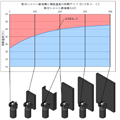
Guide line for Thermal design (BU / DU series, BG series)
- USB3 Camera BU / DU series and GigE camera BG series generate heat as they have compact size and high frame rate.
As a guide line of thermal design for safe use of cameras, thermal design manual and thermal calculation tool are available.
- USB3 Camera BU / DU series and GigE camera BG series generate heat as they have compact size and high frame rate.
-
Seminar
Application of FA camera in Machine Vision ・・・
- Our engineer conducted a lecture at "ITE2017" held in Yokohama Japan on December 2017.
The brochure for the seminar "Application of FA camera in Machine Vision・・・" is available.
- Our engineer conducted a lecture at "ITE2017" held in Yokohama Japan on December 2017.
-
Product documents
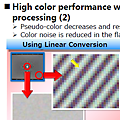
User's guide of USB3 camera DU1207M / DU806M series
- DU1207M / DU806M series are USB3 cameras with global shutter method which Sony's Pregius CMOS sensor is applied. 6 models of product range offers a choice among 12.3M pixel, 8.8M pixel, color, monochrome, with IR cut filter or Dust-proof glass (monochrome model: with Dust-proof glass).
This user's guide explains advantage and performance of DU1207M / DU806M series and details of USB3 as well.
- DU1207M / DU806M series are USB3 cameras with global shutter method which Sony's Pregius CMOS sensor is applied. 6 models of product range offers a choice among 12.3M pixel, 8.8M pixel, color, monochrome, with IR cut filter or Dust-proof glass (monochrome model: with Dust-proof glass).
-
Seminar
Why USB3? ・・・
- Our engineer conducted a lecture at "ITE2016" held in Yokohama Japan on December 2016.
The brochure for the seminar "Why USB3?・・・" is available.
- Our engineer conducted a lecture at "ITE2016" held in Yokohama Japan on December 2016.
-
Seminar
VISION 2016 ・・・
- Our sales specialist conducted a lecture at "VISION 2016" held in Stuttgart Germany on November 2016.
-
Technical Information
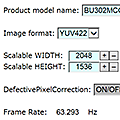
Frame rate calculation tool (BU series(CMOS))
- USB3 cameras of BU series (CMOS model) achieve reduction of output pixel number by scalable function, and also achieve higher frame rate. Frame rate is widely affected by image output format such as Mono 8bit, YUV, RGB etc.
This tool easily calculates frame rate with simulation.
- USB3 cameras of BU series (CMOS model) achieve reduction of output pixel number by scalable function, and also achieve higher frame rate. Frame rate is widely affected by image output format such as Mono 8bit, YUV, RGB etc.
-
FAQ
How to use ImageBuffer mode (BU / DU series)
- ImageBuffer mode is one of the camera imaging modes. Images shot by a camera will be accumulated to the image buffer in the camera without being transferred to PC. PC application can read out these images in the image buffer of the camera at any desired moment.
This document explains ImageBuffer mode and its usage.
- ImageBuffer mode is one of the camera imaging modes. Images shot by a camera will be accumulated to the image buffer in the camera without being transferred to PC. PC application can read out these images in the image buffer of the camera at any desired moment.
-
FAQ
How to detect frame loss (BU / DU series)
- Frame lost means that an application fails to receive some of the frames continuously sent by a camera.
This might be caused by various elements such as camera, communication line, USB adapter, device driver or API (DLL).
Frame lost can be detected by checking BlockID of image received.
This document contains how to detect a frame lost and tips to prevent it.
- Frame lost means that an application fails to receive some of the frames continuously sent by a camera.
-
FAQ
PixelFormat, PixelCoding, PixelSize
(BU / DU series, BG series)- PixelFormat is a value to indicate pixel data format of the image sent by the camera. It is standardized by Pixel Format Naming Convention (Association for Advancing Automation). (It is defined differently from Bitmap of PixelFormat.)
This document describes PixelFormat information which is useful with TeliCamSDK.
- PixelFormat is a value to indicate pixel data format of the image sent by the camera. It is standardized by Pixel Format Naming Convention (Association for Advancing Automation). (It is defined differently from Bitmap of PixelFormat.)
-
FAQ
How to get PixelFormats available in a camera
(BU / DU series, BG series)- PixelFormat is a value to indicate pixel data format of the image sent by the camera. (It is defined differently from Bitmap of PixelFormat.)
PixelFormat to set on the camera varies depend on the camera.
This document describes how to get PixelFormat list in detail with sample code.
- PixelFormat is a value to indicate pixel data format of the image sent by the camera. (It is defined differently from Bitmap of PixelFormat.)
-
Product documents
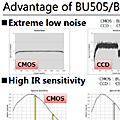
User's guide of USB3 camera BU505M / BU302M series
- BU505M / BU302M series are USB3 cameras with global shutter method which Sony's Pregius CMOS sensor is applied. 6 models of product range offers a choice among 5M pixel, 3.1M pixel, color, mono chrome, with or without IR cut filter.
This user's guide explains advantage and performance of BU505M / BU302M series and details of USB3 as well.
- BU505M / BU302M series are USB3 cameras with global shutter method which Sony's Pregius CMOS sensor is applied. 6 models of product range offers a choice among 5M pixel, 3.1M pixel, color, mono chrome, with or without IR cut filter.
-
Product documents
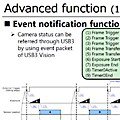
User's guide of USB3 camera BU132M
- BU132M is a USB3 mono chrome camera with 1.3M pixel resolution which e2v's global shutter CMOS sensor is applied.
This user's guide explains advantage and performance of BU132M and details of USB3 also.
- BU132M is a USB3 mono chrome camera with 1.3M pixel resolution which e2v's global shutter CMOS sensor is applied.
-
Technical Information

GenICam: What does it taste like? (BU series, BG series)(407KB)
- What's GenICamTM? It's white paper explaining GenICam that Toshiba Teli Corporation has been working on since 2004 as one of the contributing members.
-
Seminar
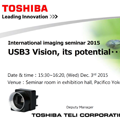
USB3 Vision, its potential ・・・(6.47MB)
- Our engineer conducted a lecture at "ITE2015" held in Yokohama Japan on December 2015.
The brochure for the seminar "USB3 Vision, its potential・・・" is available.
- Our engineer conducted a lecture at "ITE2015" held in Yokohama Japan on December 2015.
-
Product documents
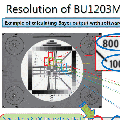
User's guide of USB3 camera BU1203MC
- BU1203MCF is a 12M pixels USB3 camera with back side illuminated rolling shutter type CMOS sensor.
This user's guide contains description about USB3 and rolling shutter in addition to description of advanced features and functions of BU1203MCF.
- BU1203MCF is a 12M pixels USB3 camera with back side illuminated rolling shutter type CMOS sensor.
-
Technical Information
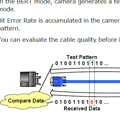
Bit Error Rate Test (BERT) Function
(BU series (CMOS))- This is one of the most important factors for using USB3 application. Toshiba Teli's USB3 camera BU series (CMOS model) have an unique "BERT Function" which can easily check a signal quality including cable.
With "BERT Function", signal quality can be checked under user's circumstances at starting up or change system.
- This is one of the most important factors for using USB3 application. Toshiba Teli's USB3 camera BU series (CMOS model) have an unique "BERT Function" which can easily check a signal quality including cable.
-
Seminar
USB3 camera that offers new value for image processing (in Japanese)
- Our sales specialist conducted a lecture at "ITE2014" held in Yokohama Japan on December 2014.
The brochure for the seminar "USB3 camera that offers new value for image processing" is available.
- Our sales specialist conducted a lecture at "ITE2014" held in Yokohama Japan on December 2014.
-
Seminar
Reacting to changing machine vision needs by USB3 and Sony's next generation CMOS sensor
- Our sales specialist conducted a lecture at "VISION 2014" held in Stuttgart Germany on November 2014.
The brochure for the seminar "Reacting to changing machine vision needs by USB3 and Sony's next generation CMOS sensor" is available.
- Our sales specialist conducted a lecture at "VISION 2014" held in Stuttgart Germany on November 2014.