
Technology
Products
About Surface Flaw Detection Scope
Introduction
Do you have any trouble about the inspection of flat surface?
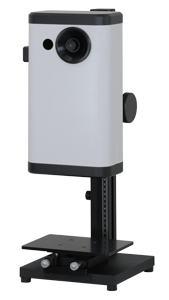
Surface Flaw Detection Scope (reffered to as SFD Scope) is suitable to detect the flaws on the glossy surface without software processing.
We would like to introduce how SFD Scope inspects the flaws.
1. Features
1.1. What SFD Scope can do
“SFD Scope” is the imaging solution can easily visualize minute scratches on the glossy surface.
This solution is recommended;
- 1) For people inspecting minute scratches visually
- 2) To reduce the cost of inspection

1.2. The features of SFD Scope
It is difficult to inspect the minute scratches visually. However, the scratches are colored and recognized easily when inspecting with SFD Scope.

The SFD Scope visualizes and colorizes light beams based on the degree of scattering and diffusion of reflected light from the inspected surface. For example, defects with raised or sharp edges, such as scratches, produce a wide scattering angle and are therefore easier to detect. However, defects resulting from processes like polishing with abrasive grains tend to have smoother edges, resulting in narrower scattering angles and making detection more difficult. Consequently, even if flaws are similar in size, some may not be detectable with the SFD Scope depending on their depth and contour.

2. Application
2.1. The purpose of SFD Scope
SFD Scope is suitable for inspecting glass materials, panel materials, optical components, precision parts, and more.
- - The surface of glass materials
- - The surface of panel materials (FPD, sheet etc.)
- - The surface of optical material (glass plate, filter, etc.)
- - The polished and mirrored surface of precision parts
We would like to accept the demonstration with the customer’s samples.
- - Those who are interested in what kind of images can be obtained with a SFD Scope
- - For those who are having trouble with traditional scratch inspection
Please contact us if you have any questions.
3. Sample images
3.1. Glass surfaces

3.2. Acrylic plate (Resin)

3.3. Aluminum plate (Rolled surface)

3.4. Anodized aluminum plate (white)

3.5. Anodized aluminum plate (black)

3.6. Roughness and color of sample surface
The color of images taken with SFD Scope changes depending on the roughness of the subject's surface.
If the surface is mirror-finished, it will appear blue in the image. The rougher the surface, the redder it appears.
Here are example photos of aluminum surface samples.
If the surface is rough and the entire subject appears red, defects can be identified by the brightness.

* The aluminum surface sample was kindly provided by Izumi Metal Corporation (Japan).
3.7. Oil droplets on the water's surface

4. Principle of SFD Scope
4.1. Toshiba patented technology “OneShotBRDF TM”
"SFD Scope" adopted "OneShot BRDF" technology developed by Toshiba Research and Development Center.
Click here for details on OneShotBRDF TM
* It opens in a separate window
Applicable products
-
Surface Flaw Detection Scope