

Learn the “eyes” of the AI and robotics era
- An Introduction to Machine Vision Cameras from the Ground Up -
2. Main Components of a Machine Vision Camera
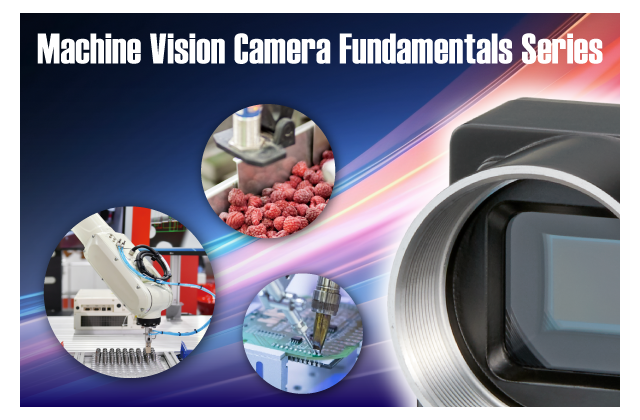
Machine vision cameras are specialized imaging devices used in industrial inspection and automation systems. Unlike conventional cameras, they are optimized for industrial applications, with features such as trigger control and dedicated communication interfaces for fast and accurate image acquisition.
This chapter explains the basic functions of key components, including image sensors, processing, control systems, lenses, and lighting.
Conventional Cameras vs. Machine Vision Cameras
- A machine vision camera, also known as an industrial camera, is designed for purposes that differ from those of a conventional camera.
- By working together with a PC or other processing devices, machine vision cameras can focus on image acquisition and be adapted to a wide variety of industrial applications.
- In this lesson, we will introduce the key components that make up a machine vision camera.
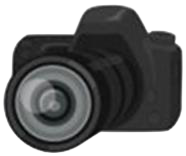
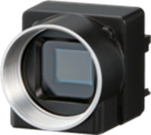
| Component | Function | Photography Camera | Machine Vision Camera |
|---|---|---|---|
| Image Sensor | Converts light into electrical signals | CCD / CMOS Sensor | CCD / CMOS Sensor |
| Image Processing | Processes sensor signals to generate image data | Image Processing CPU (Image Engine) | Processor, DSP, Dedicated IP Core, etc. |
| System Control | Controls camera operation and image acquisition settings | System Control Circuit | System Control Circuit, etc. |
| Shutter | Controls image capture timing | Shutter Button / Self-Timer | Free-Run or Trigger Control |
| Lens | Collects light and forms an image on the sensor | Built-in Lens or Dedicated Interchangeable Lens | Interchangeable Lens |
| Viewfinder / Display | Used to check image composition and captured images | Viewfinder / Built-in LCD Monitor | PC Display / Monitor |
| Image Recording | Stores captured images in various file formats | JPEG, RAW, MP4, etc. | JPEG, RAW, etc. (Depends on PC/System) |
Machine Vision Camera
Image sensor
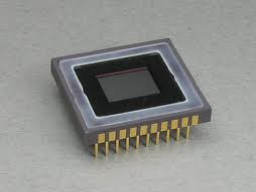
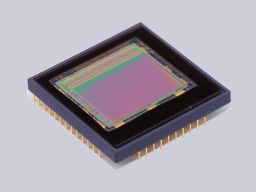
- An image sensor is a device that converts incoming light into electrical signals.
- day, most cameras use CMOS sensors. In the past, CCD sensors, which have different operating principles, manufacturing methods, and structures, were widely used.
- An image sensor consists of many tiny photoelectric conversion elements called pixels. Depending on how these pixels are arranged, image sensors can be classified into two types: "Line sensors" and "Area sensors".
- - Line sensor : Pixels are arranged in a single line. A two-dimensional image is created by capturing successive lines as the object or camera moves.
- - Area sensor : Pixels are arranged in a two-dimensional grid. A two-dimensional image is captured in a single exposure (“one shot”).
- Unlike conventional cameras, machine vision cameras do not use a shutter button. Instead, the timing of image acquisition is controlled electronically.
- - Free-Run Mode : The camera continuously captures and outputs images, similar to a television or video stream.
- - Trigger Control : The camera captures an image when it receives an external electrical trigger signal.
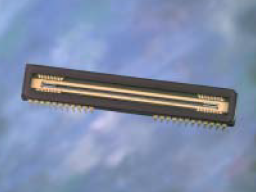
(Formerly manufactured by Kodak)
(Manufactured by Sony)
(Toshiba Teli Original)
Image Processing and Control
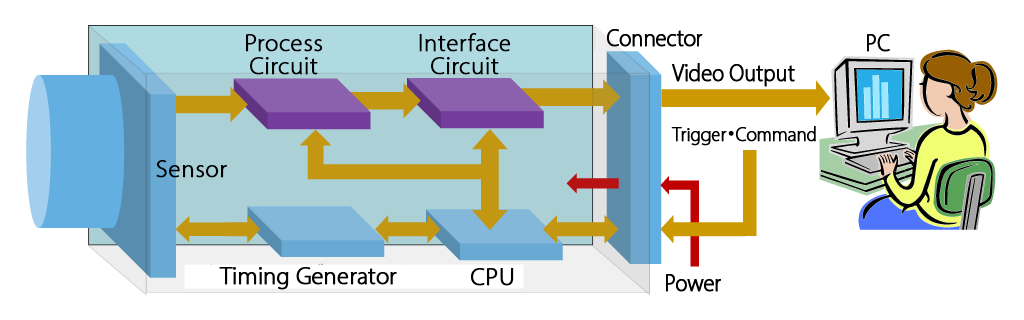
- The image signals output from the image sensor undergo internal signal processing before being transmitted as image data.
- Various image processing functions are performed inside the camera to optimize the image for the intended application, including:
- Gain adjustment, Offset adjustment, Gamma correction / LUT (Look-Up Table), Sharpness enhancement, Shading correction, FPN (Fixed Pattern Noise) / PRNU (Photo Response Non-Uniformity) correction, Defective pixel correction
- Bayer-to-RGB conversion, Color masking, RGB matrix processing, White balance adjustment, RGB gain (color gain) adjustment, Hue adjustment, Color saturation adjustment, RGB-to-Bayer conversion
The functions listed above are available only on color cameras.
Image Output
- The processed image data is transmitted from the camera to a PC through a communication interface.
- In machine vision systems, industry-standard interfaces and communication protocols are commonly used to enable communication between the camera and the PC.
- - Interface
- USB3 Vision : An industry-standard interface based on USB 3.0 technology.
- GigE Vision : An industry-standard interface based on Gigabit Ethernet technology.
- CoaXPress (CXP) : A high-speed interface standard widely used in the machine vision industry.
- Camera Link : A long-established interface standard widely used in machine vision applications.
- - Communication Protocols
- GenICam : A generic standard designed to provide a common way to configure and control machine vision cameras, regardless of manufacturer or interface technology.
- IIDC2 : A camera control protocol that defines camera functions through registers. Camera parameters are controlled by directly reading from and writing to the camera's internal registers via USB communication.
- - Interface
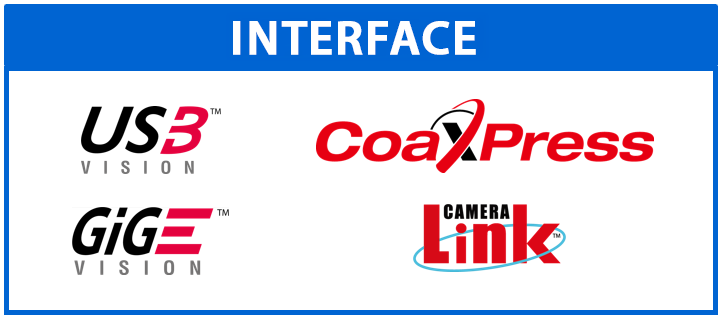
USB3 Vision, GigE Vision, and Camera Link are trademarks or registered trademarks of A3.
CoaXPress and IIDC2 are trademarks or registered trademarks of JIIA.
GenICam is a trademark or registered trademark of EMVA.
Camera Cables and PCs
- The type of cable and connector used to connect a machine vision camera to a PC depends on the interface.
- The maximum cable length may also be limited by the specifications of the selected interface.
- The required PC performance depends on the application. For example, GigE Vision and USB3 Vision cameras can often be connected directly to a notebook PC. By using a hub or network switch, multiple cameras can be connected to a single PC.
Multiple cameras can also be connected to a single PC by using a network switch or USB hub. - CoaXPress and Camera Link systems typically require a frame grabber board, so a desktop PC is commonly used.
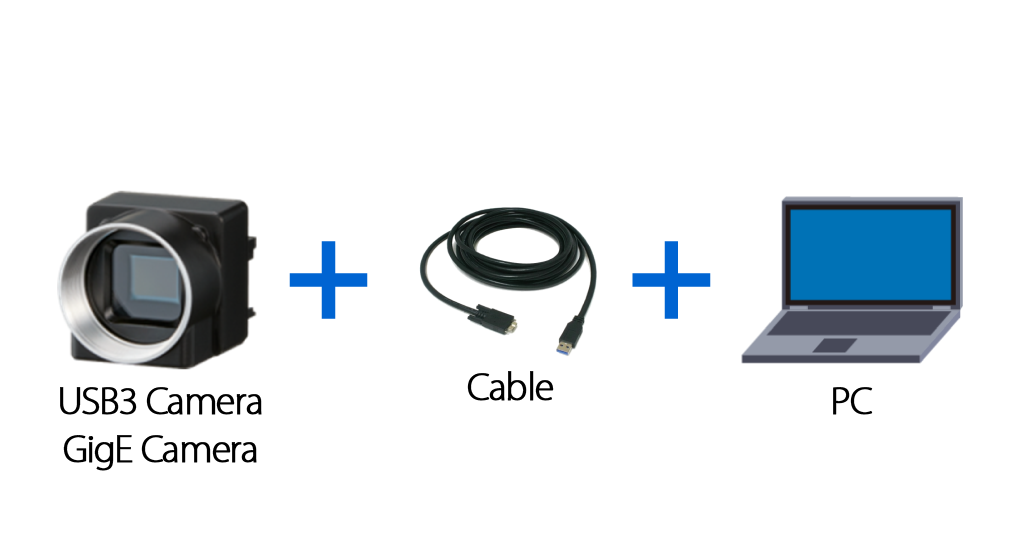
(Notebook PC)
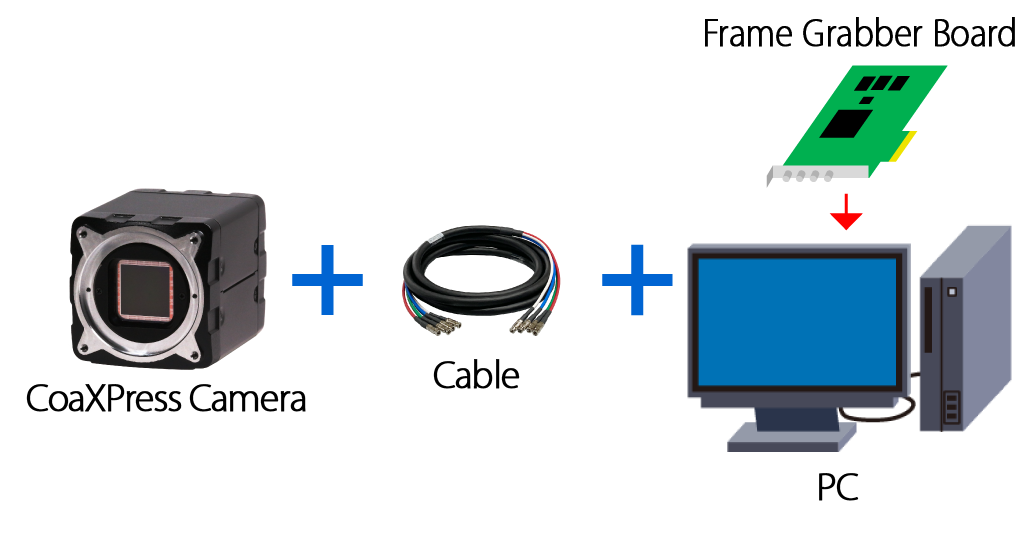
(Desktop PC)
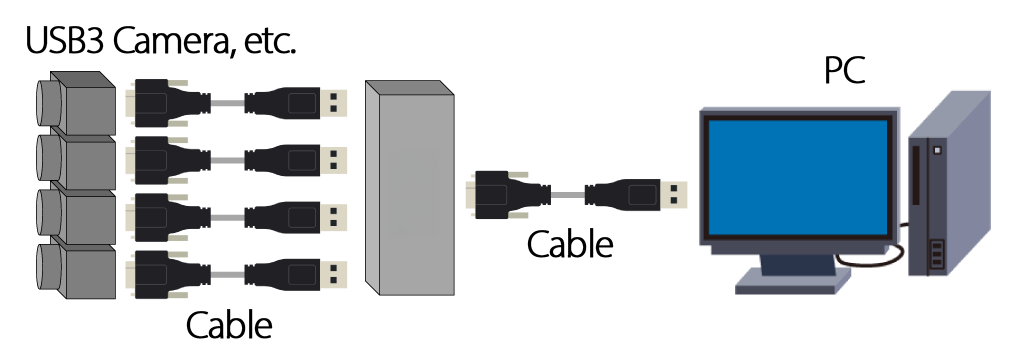
(Multiple Cameras Connected to One PC)
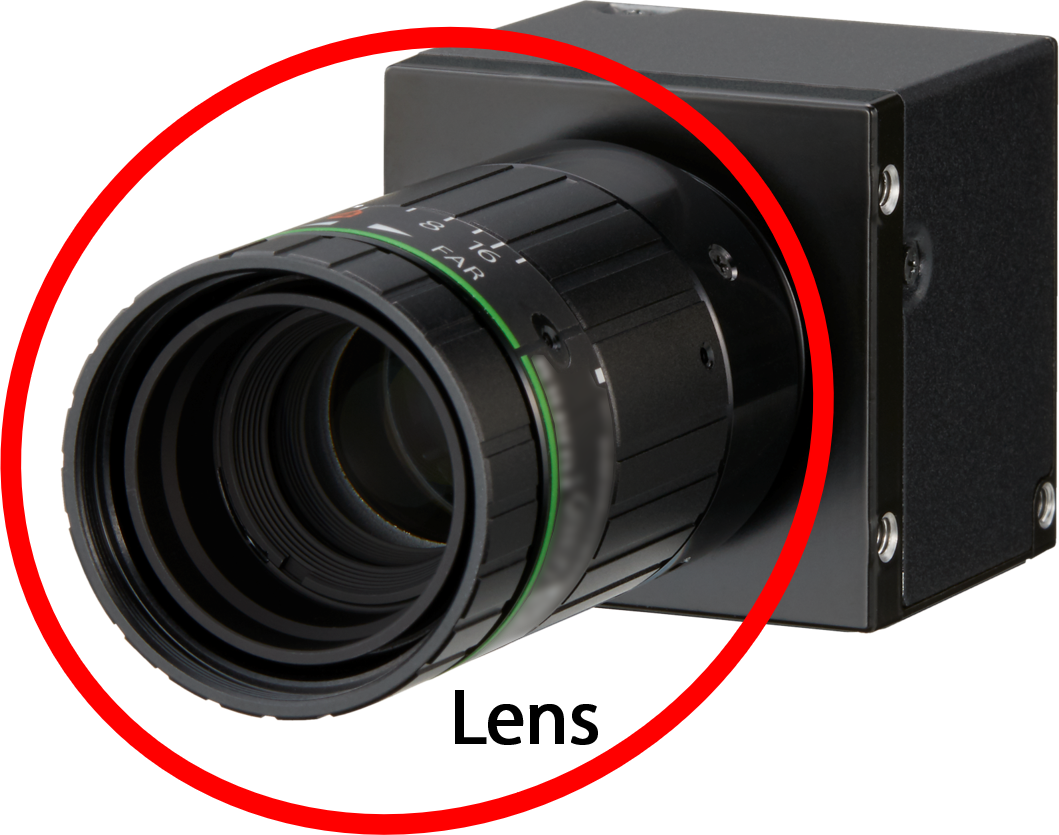
Lens
- A lens collects light from an object and focuses it onto the image sensor to form an image.
- The characteristics of the captured image vary depending on the type of lens used.
- - Wide-Angle Lens Captures a wider field of view.
- - Telephoto Lens Magnifies distant objects and makes them appear larger.
- - Whether a lens is considered wide-angle or telephoto depends on the combination of the image sensor size and the focal length of the lens.
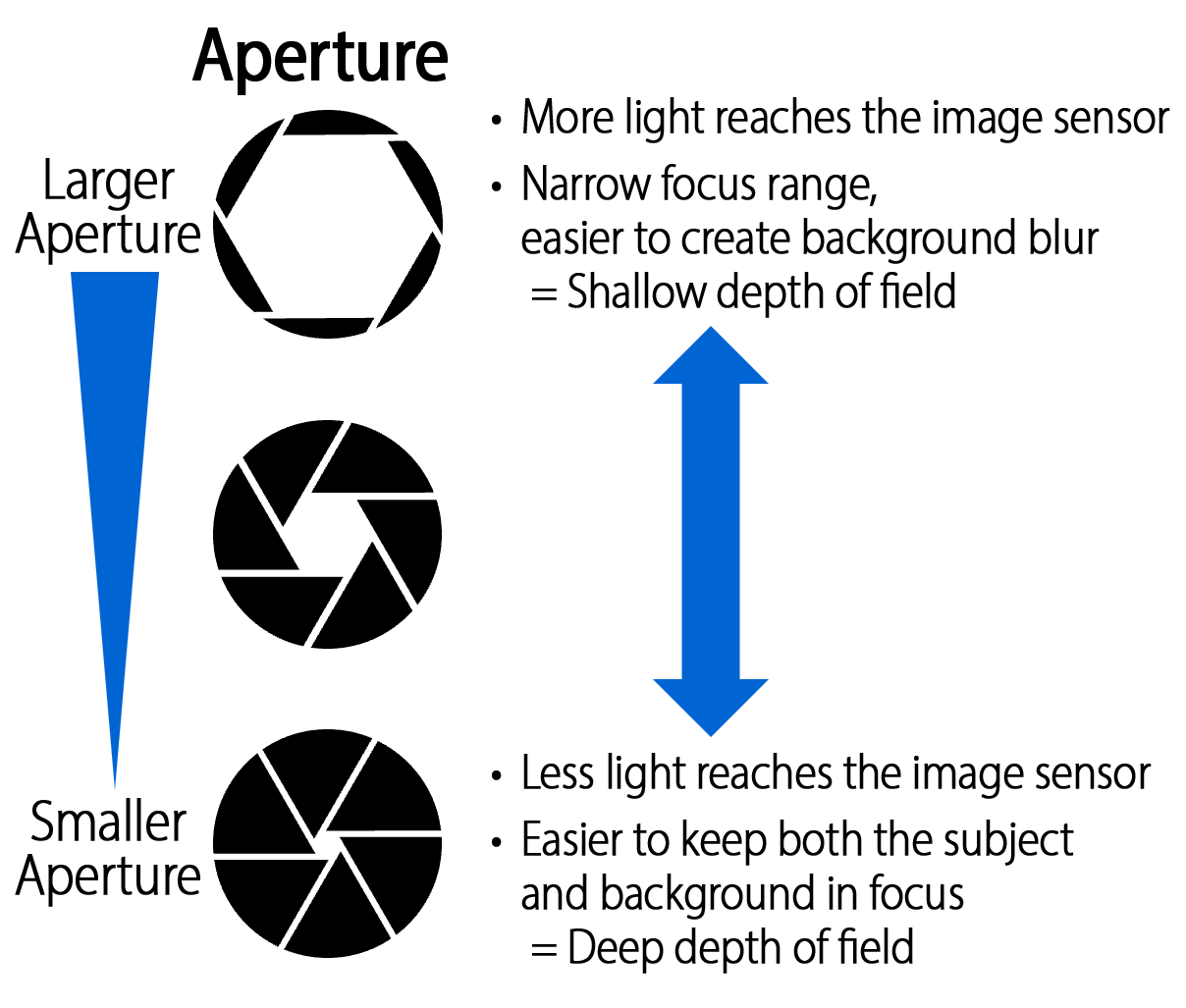
- Lenses are equipped with an opening called an aperture, which controls the amount of light entering the camera and affects image characteristics:
- - When the aperture opening is made smaller, less light reaches the image sensor. At the same time, the depth of field increases, making it easier to keep both the subject and background in focus
- - When the aperture opening is made larger, more light reaches the image sensor. However, the depth of field becomes shallower, making it easier to isolate the subject from the background.
Lighting
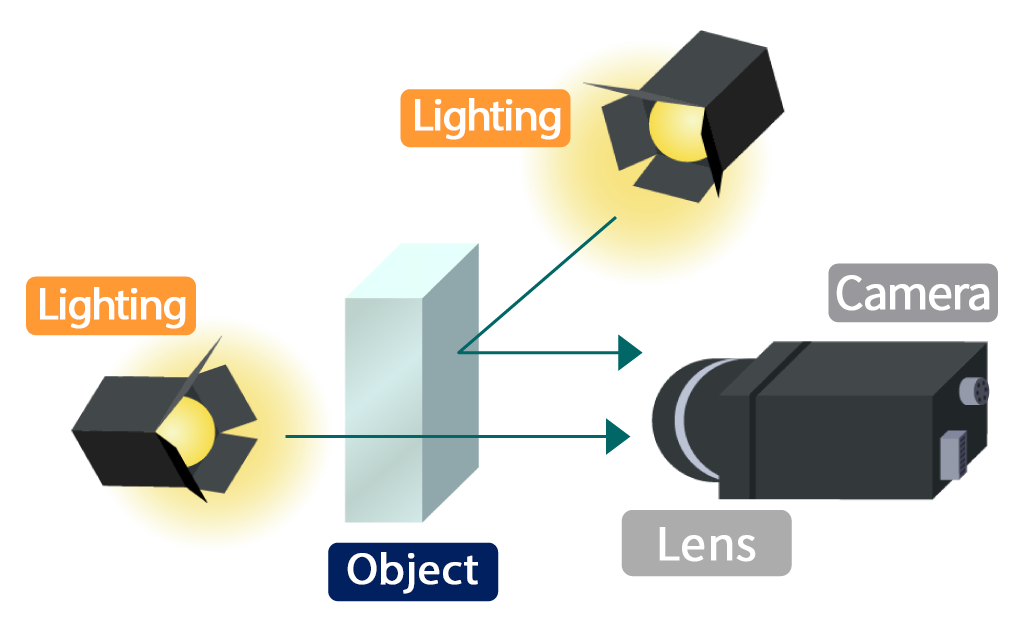
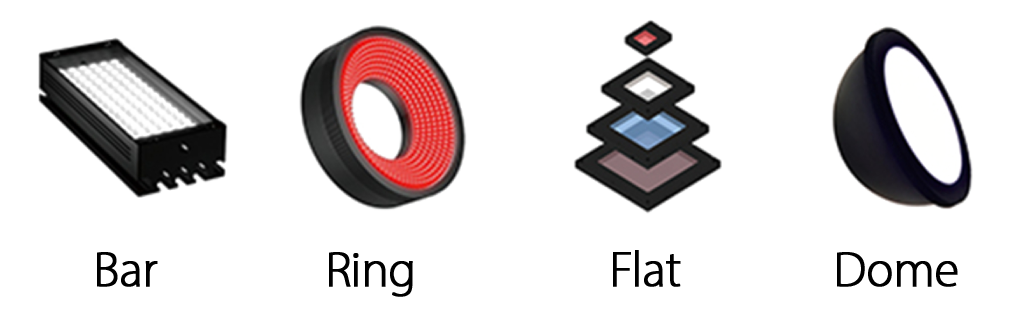
- Lighting used with machine vision cameras is available in a variety of forms. By selecting the appropriate illumination method for the application, optimal images can be obtained.
- - Bar Light
- - Ring Light
- - Flat Light (Area Light)
- - Dome Light
- - Coaxial Light
- The appearance of an object can also vary depending on the color, or wavelength, of the illumination used.
- - White Light
- - Monochromatic Light (Blue, Green, Red, etc.)
- - Ultraviolet (UV) Light
- - Infrared (IR) Light
Technical explanation about lighting.
https://www.ccs-inc.co.jp/product/vision/